Showing posts with label Alfred Marshall. Show all posts

Monday, 18 October 2021

Much more than teaching... Marshall Library's extensive and eclectic research collections by Simon Frost, Deputy Librarian


It’s often asserted that the Marshall Library is a teaching library and, during Full Term, this is undoubtedly the case. To suggest, however, that it is solely a teaching library belies the contributions made – and being made – by it’s extensive and eclectic collections of archives and rare books to the work of the numerous researchers who visit the Marshall from all over the World. The majority of these visits occur during vacation and illustrate the way in which the focus of the library changes from teaching to research support with archival enquires, supervision and scanning occupying proportionately more staff time.


The Marshall Library archives consist primarily of the notes, correspondence and photographs of Professor Alfred Marshall (22 boxes) and Professor Austin Robinson (108 boxes). Other Cambridge economists – Pigou, Foxwell and Jevons – are also represented together with extensive lecture notes produced by various undergraduates in the Nineteenth and Twentieth Centuries. There are also some surprises. Mary Marshall, Alfred’s wife and economist in her own right, was also an accomplished water colourist and the collection includes numerous portfolios of her work. Austin Robinson became a pilot during the First World War and flew flying boats with the Royal Naval Air Service and later with Shorts Brothers as a test pilot. He was a keen photographer his archives contain hundreds of unique photographs early aircraft and airships.


Mary Paley's watercolour album                                                

Photos from Austin Robinson's papers


Accompanying these archival materials are many thousands of rare books which originated from the working collections of Marshall, Keynes and other prominent Cambridge economists. Many of these contain significant amounts of marginalia or inter-lea
ved notes. Again, there are surprises.  An inscription in one tome indicates that it was retrieved Herman Goering’s personal train at Berchtesgaden in 1945 and was donated to the library by Nicholas Kaldor who, at the time, was Chief of the Economic Planning Staff of the US Strategic Bombing Survey.

Nicholas Kaldor

For many years these archival collections were poorly organised and widely distributed throughout the Faculty of Economics until, in the late 1990s, the then Marshall Librarian, Rowland Thomas, secured funding from the National Bank of Italy for an archivist to undertake their organization and cataloguing. At the same time the rare books were subject to a programme of retrospective cataloguing in order to make them more accessible and to highlight any notable annotations.

The simple expedient of uploading pdf files of the newly created archival catalogues to the Marshall Library website in the early 2000s garnered considerable interest amongst economic historians worldwide and material in the archives has been used in the production of at least sixteen books ranging from biographies of Marshall, Pigou and Fay to books about flying boats in the Royal Naval Air Service. The most recent publication we’ve provided assistance with is Economics of Visual Art: Market Practice and Market Resistance / Amy Whitaker (2021). We’ve also identified numerous chapters in books and journal articles that have been produced using resources in the Marshall archives.


The Marshall Library has never really been solely a teaching library. The dichotomy between its teaching and research responsibilities has always been there and it’s what continues to make it an interesting place in which to work.

Monday, 27 September 2021

Welcome to the Marshall Library for New Students

 Welcome to Cambridge from the Marshall Library Team! 

If you are a student in Economics or Development Studies we are the Library for your course. We have a comprehensive Economics and Development Studies collection, both in print and online. We have multiple copies of all your key textbooks and, where possible, we have provided ebook access too. We also hold the Archives of Alfred Marshall and other key figures from Cambridge Economics.

The Marshall Library is based on one side of the Austin Robinson Building (opposite the main Faculty of Economics entrance) and has a surprisingly beautiful Reading Room, which you will enjoy using as a study space.

To begin with during Michaelmas Term we will be operating a Book a Study Space service for longer stays in the Library space: https://www.marshall.econ.cam.ac.uk/book-seat    but we hope to be able to open up more as term progresses. If you just want to come in and borrow/return a book or speak to us for help and advice you can just come in. Keep up to date with our current library services here: https://www.marshall.econ.cam.ac.uk/current-marshall-library-services

We strongly recommend that you watch our Library Induction talks either in person, or via recordings on your Moodle Induction pages. For a flavour of our space and services please watch our brief video Introduction to the Marshall Library: https://bit.ly/3EU2CYO

We have a useful website which gives you all the information about the Library, our services and our resources such as online databases and datasets: https://www.marshall.econ.cam.ac.uk/

To find resources you need for your studies it is important that you learn how to use the catalogue iDiscover: https://idiscover.lib.cam.ac.uk/
We have shared the Economics iDiscover workbook with you and really recommend you spend a short time doing this to get the best out of the catalogue and save time later!


For basic tips about using Cambridge Libraries, including searching iDiscover check out the Library Essentials Libguide

If you cannot find a book, journal article, database or dataset then just ask us! All the Marshall Library staff are very friendly. We are here to help you and look forward to seeing you soon in the Library.

Keep in touch by following us on Twitter @Marshalllibrary and on Facebook: https://www.facebook.com/MarshallLib


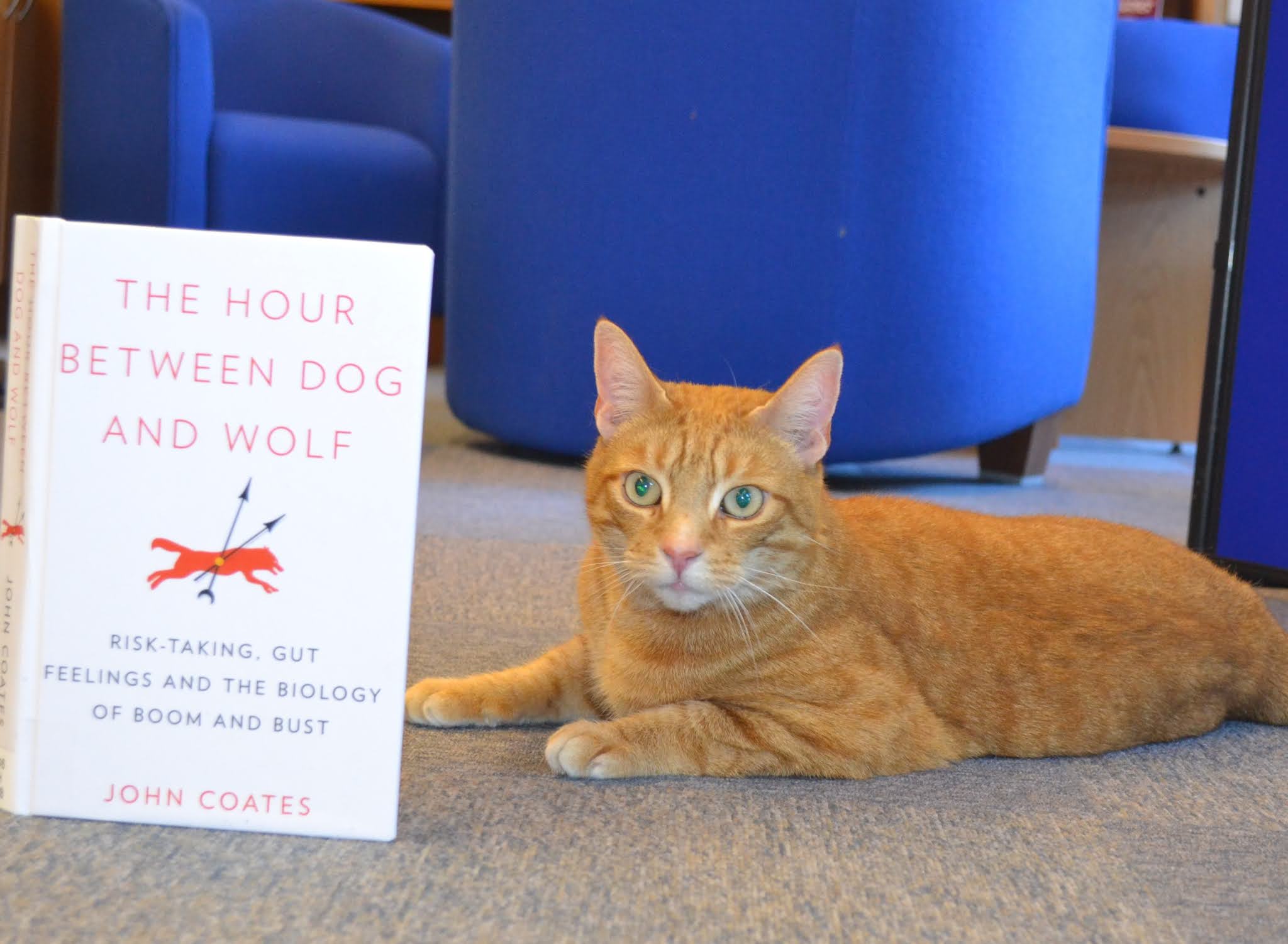
You are likely to see our mascot, Jasper the #Economicscat on Twitter and, hopefully, in catperson, at the Library where he makes a couple of visits each year


Friday, 18 October 2019

The Rising Tide: Women at Cambridge - Exhibition Launch 15th October 2019

I was very privileged to be invited to attend the launch of the University Libraries new exhibition:
The Rising Tide: Women at Cambridge, which marks 150 years since the founding of the Cambridge's first women's college. It tells the stories of lives of women at Cambridge and the fight for equal educational rights.
You can read more about the exhibition, curated by Dr. Lucy Delap and Dr. Ben Griffin on the Cambridge University Library website.

I was lucky to be invited to the launch as the Marshall Library has contributed to Rising Tide exhibition by lending our Roger Fry portrait of Mary Paley Marshall 1850-1944, the first librarian, benefactor and founder of the Marshall Library of Economics. I am very proud, as Marshall Librarian, to see Mary hanging in pride of place along with other key portraits of Cambridge women in the University Library main corridor.
Mary Paley Marshall. Courtesy of the Marshall Library, University of Cambridge.

Mary Paley was one of the first women to study the Moral Sciences Tripos at Newnham College, as well as one of the first to take the exam. She was taught by Alfred Marshall, whom she later married. She was also the first woman lecturer in Economics. She could not graduate, of course, and, unfortunately died before women were granted this right at Cambridge in 1948. John Maynard Keynes and Austin Robinson commissioned this portrait by Roger Fry in honour of her work for the Faculty of Economics. She sat for this portrait in Keynes' rooms at Kings. This is actually the second portrait, which was accepted. The first portrait painted by Roger Fry was not a good enough likeness!
It was a great evening with some excellent speeches, Dame Jocelyn Bell Burnell gave a very moving speech about her discovery of pulsars, while studying for her PhD at Murray Edwards College (then New Hall) at Cambridge. It was also a wonderful opportunity to meet some amazing Women at Cambridge, past and present. I particularly enjoyed the story behind the "Behave Badly" badge: Lisa Jardine, a renowned historian who studied at Newnham College 1963-73 used to hand out these badges to women friends - those she though would benefit from them. One such badge was worn by Jane Tillier, first laywoman chaplin at Jesus College in 1984 and Jane used to wear it under her robes. The exhibition is on at the University Library until January 2020 and has involved Libraries and Archives from all over Cambridge - I thoroughly recommend visiting it.

Clare Trowell
Marshall Librarian


Thursday, 19 September 2019

Open Cambridge: celebrating Keynes at the Marshall Library by Sue Woods


It is 100 years since the publication of Keynes’ Economic consequences of the peace, and in conjunction with the Faculty of Economics’ centenary conference held earlier in the week at King’s College, the Marshall Library organised displays and a series of blog posts to illustrate the significance of Keynes’ work.
The Marshall Library welcomed a record number of Open Cambridge visitors, including artists, historians, architects, and economists, and it was a delight to see visitors’ first impressions when entering the library.   Hidden behind the stark façade of a brutalist building designed in the early 60’s by Sir Hugh Casson, the Marshall Library is open plan, flooded with natural light, and features a spiral staircase leading to the gallery.
View of the Marshall Library Reading Room showing the spiral staircase, designed by Sir Hugh Casson

The Keynes displays featured first editions of “The economic consequences of the peace”, and Tardieu’s “The truth about the treaty” which sought to justify the Treaty and counter the criticisms levelled at it by Keynes. A letter from Charles Waldstein to Keynes was found within the pages of the Marshall Library's copy of this book in which he declared Tardieu to be '... such a swine' and encouraged Keynes to respond to him. 
In addition, there was a display of Keynes’s correspondence from 1919, including the exchanges between Maynard and his mother when he was on the point of resigning his position as H.M. Treasury adviser at the Paris Peace Conference in Versailles.  His mother shows her concern both for his welfare and his reputation. 
Florence Ada Keynes, Maynard's mother
In the Mary Paley Room, which houses the Marshall Library’s collection of rare books, we showed the original copies of The Economist from December 1919, when both Marshall and Keynes were publishing within a week of each other.  At the age of 77, Marshall published the two-volume “Industry and Trade”, and the following week, there was the announcement of Keynes’s “Economic Consequences of the Peace”, with the first review appearing on 27 December.
It was Alfred Marshall who encouraged Maynard to become an economist, as he was impressed by Maynard’s work.  After graduating with a first class degree, Maynard stayed at King’s for a fourth year and started weekly supervisions with Marshall, although he had not yet decided to become an economist.  Maynard enjoyed the intellectual challenge of studying economics with Marshall, and in turn Marshall considered Keynes’ essay on comparative railway systems ‘a brilliant answer’.  This praise then prompted Keynes to write to Lytton Strachey, “I find economics increasingly satisfactory, and I think I am rather good at it.”
Lytton Strachey and Virginia Woolf

We had anticipated interest in the Keynes exhibition, but it is always intriguing to find out why visitors have specially selected your library to visit as part of Open Cambridge.  It was while visiting the Mary Paley Room that one visitor started enquiring about the basement which had been mentioned earlier in the tour.  He was an artist who specialised in photographing behind the scenes in libraries and museums and he wondered out loud if it would be possible to visit the Marshall Library basement.  No matter how carefully you plan an exhibition, there will always be something else that visitors want to explore. 


Wednesday, 15 March 2017

The Return of Alfred Marshall’s Book V, Ch.VII of Principles of Economics (annotated) from Japan


Prof. Shoichiro Uemiya visited the Marshall Library Archive on 9 March, 2017 to return a book that belonged to Alfred Marshall. The book appears to have been in Japan for some time and possibly since the 1920s. 


As Prof. Uemiya  explains in his own words:
“I am an Emeritus Professor of Kobe University in Japan. My major field is the history of economic thought. I studied for a year (1977-78) as an Honorary Research Fellow under the late Prof. R.D.C.Black at Queen’s University, Belfast.

Just before my retirement in March 2012 Mrs. Taeko Minakata, the wife of my supervisor the late Prof. Kanichi Minakata (1923-1985), asked me to return this book, which is part of Marshall’s Principles of Economics. The book contains pages with bound-in pages of written script – possibly in the handwriting of Marshall himself. Her husband told her that he received this particular book from his old-time supervisor Prof. Yasaburo Sakamoto (1894-1981). Prof. Minakata’s major field was Marshall’s Economic Theory. He came to Cambridge for a year (1962-63) to study and stayed at St. Edmund’s House. However, Mrs. Minakata has no idea when or where Prof. Sakamoto got the book. He did travel between 1919-1927 in England, France, Germany, Italy and Switzerland.”

The book comprises Book V, Ch. VII  pp. 449-610 of Principles of Economics. Many of the pages include handwritten insertions in coloured pencils and ink. There is also a stamp showing 15 Jan. 90, University Press, Cambridge. Clare Trowell, Marshall Librarian and Simon Frost, Deputy Librarian can confirm that the inserted pages are in Marshall’s handwriting as the Library Rare Books collections contain many examples of Marshall’s handwriting and it is clearly recognisable.

The Marshall Library Archive contains several photographs, including an intriguing picture of Mrs Mary Paley Marshall entertaining a Japanese visitor and his wife at her house, Balliol Croft, in 1928. This visitor is Prof. Tsunao Miyajima (1884-1965) who translated the Memoirs of Alfred Marshall (1925) into Japanese. Between 1919-1928 Prof. Miyajima was Prof. at the Kansai University, Osaka. In 1928 he also visited France. Between 1948-1952 he was Chief Director of Kansai University. There does not appear to be a link between Prof. Miyajima , Prof. Sakamoto and the mysterious annotated book that has just been returned to the Marshall Library Archives.


We plan to catalogue the returned book as a Rare Book and make it available to scholars of Alfred Marshall as soon as possible.


Prof. Uemiya also kindly donated a copy of his translation of the work:

The Scope and Method of Political Economy / J.N. Keynes    Marshall Library   20 F 18  http://bit.ly/2lZhbpu


Wednesday, 30 September 2015

My favourite things

Marshall Library crew a AM's grave, 2015
Fear not, this is not a Sound of Music-inspired farewell song or poem. However, as I’m trying to tie up loose ends, and tidy up my to-do list, inbox and desk, I’m just looking back a bit – before the end of my last full day at work at the Marshall (30 September 2015), after 1 year, 9 months, and 28 days (or 667 days and 8 hours if you prefer; I used a nifty online tool to “calculate” this!).

One of my favourite things – also pretty unusual – was the annual visit and tending to Alfred Marshall’s grave; my colleague, Simon Frost, informed me that this had already been a tradition: the Marshall Library staff going once a year to pay homage to the very gentleman without whom the library would not be what it is today. A minor detail was that the tradition had lapsed for about 21 (or more) years prior to the summer of 2014, but for Cambridge that’s a minor hiccup in a tradition usually measured in centuries. I have to admit though that a) it helps if you are a keen gardener, or b) like to have an outdoor picnic (which happens afterwards). This year’s event was made all the more memorable by being thoroughly drenched on the way back to the office/work, and that I will never forget this thought-provoking shower!

Page of Sponsorship Document
Another activity I had never done before but which turned out to be fun, was to develop – with strong input from Simon and the team – a document of sponsorship opportunities at the Marshall Library (our approach and final version also benefited hugely from the input of Laura Greenfield, a colleague at the UL). Even though none of the potential sponsors we approached at the annual Economics Careers Fair [link only works with a Raven user name and password, i.e. for current members of the University] were that keen, and none ended in sponsorship, it was useful to think of potential ideas for improving our provisions and services, if only we had external funding. It was fun to consider what potential partnerships the Library could engage with, with organisations and companies.

Finally, my initial idea of some guerrilla marketing, to create a stronger awareness amongst students and lecturers that the Marshall Library is very happy to receive recommendations for new books, or more copies of textbooks, resulted in Simon’s suggestion to approach lecturers with the idea of including our PR slide and flyers in their lectures. Again, our colleague Lisa provided the memorable visualisation here of our “cry for ‘HELP!’”.
There are a couple more things I could bore you with, such as the Focus Group we convened, and that thanks to this group of students our Social area now has breakfast bar-type tables and chairs (which are very popular in term time); but in the end, I promised myself to keep this short.
If you are interested in following up on the Sound of Music reference after all, here is a link to the video https://www.youtube.com/watch?v=0IagRZBvLtw


CG 
(Marshall Librarian 2 December 2013 to 30 September 2015)

Thursday, 28 May 2015

2039, Alfred Marshall and copyright

A lot of people will know that the Marshall Library of Economics contains quite extensive archival materials. Papers by and relating to Alfred Marshall (1842-1924) are one of the bigger parts of our manuscript and type-written collection. 22 archival boxes, various larger volumes and objects give a good picture of Marshall’s prolific life as a writer, academic, and author.

Whereas a fair amount of his writing was published, and some of these publications are even available online, not all has been made available to the public. As with many authors who left us with a substantial quantity of writings, in Marshall’s case we have quite a few unpublished texts in our collection.

PG in May 2015
Very recently, Philomena Guillebaud, Marshall’s great-niece, transferred ownership of copyright to the Marshall Library. For most published works this is of little significance, as the copyright of published texts by Marshall ran out on 31 December 1994 (70 years after his death); however, in the UK any unpublished materials remain “in copyright” until 2039, a date set in 1989 to discontinue perpetual copyrighting of unpublished writings.

PG and CG in May 2015
Thanks to Ms. Guillebaud’s actions, the Marshall Library will now be in a position to respond to scanning and copying requests, as well as to enquiries about publishing unpublished materials, in a more direct manner. The Library is very grateful to Ms. Guillebaud’s generous gift, and hopes that this will help the Marshall Library to assist scholars better. If you have any interest in Marshall’s papers, please contact us.

CG

Thursday, 18 December 2014

2014 – looking back

J. Hagelberg; photo: D. Ridge
The following is my attempt to look back at 2014, seeing what happened at the Marshall Library, and to say thanks to my colleagues who have worked extremely hard in the last 12 months.

January: 
• We pick up the J.C. & G.B. Hagelberg collection; not all volumes were suitable to be added to the Marshall Library holdings, but some gems have been kept.
• Our colleagues Lisa and Oksana visit some other libraries to get ideas for a possible new Issue Desk at the Marshall.
• Introducing up to 50 online renewals, and allowing readers to renew vacation loans (one of the many ideas Simon Frost has had, and which we implemented).

cover of ebook / 31 A 62 Euro
February:
• We buy e-credits for ‘Economics of Money, Banking and Financial Markets’, European edition, Matthews/Giuliodori/Mishkin which will become the most-used ebook for 2014-15 in Cambridge.
• Marshall Library Survey is launched.

March: 
• Thanks to Lisa’s design skills, and Alfred Marshall encouraging our readers, our campaign to get more recommendations for new books is launched.
• Upgrading our subscription of the UN Comtrade platform to ‘Premium access’ allows virtual unlimited downloads of data sets.

April: 
• Free photocopies of reading list materials are being made available; some of these former counter items are still available 
• Easter Term Sunday Opening Trial - for 6 out of 7 Sundays in term time - is moderately successful.
• Further improvements to borrowing are introduced, primarily helping readers to be able to renew overdue books.

New Library Mug, design L. Wilkens
May:
• Extra exam support: opening Mon-Fri at 8:30 between 26 May 2014 and 13 June 2014 was a cost-neutral attempt to support our students more (another of Simon Frost’s ideas).
• Library Survey Highlights published: http://www.marshall.econ.cam.ac.uk/news/library-survey-2014-highlights; students want an area where they can eat (the 'Social Area' is created in October 2014) and a dedicated group study space (still to do!); see also http://www.marshall.econ.cam.ac.uk/news/library-survey-2014-your-suggestions-our-feedback
• A design for a new Marshall Library mug – several designs provided by Lisa – is voted on, and has been available since June 2014: http://www.marshall.econ.cam.ac.uk/news/vote-for-a-new-marshall-library-mug-have-a-chance-to-win-1-mug

Social Area, October 2014
June: 
• Focus Group session of Library users – some very interesting suggestions are made by those students attending (e.g. high tables to sit at and eat; implemented). A lot of food for thought for us.
• joining forces with the UL and the Judge Business School we start a subscription to a new eresource: Bankscope.

July:
• IT colleagues improve WIFI access in the Library (as requested in the Library survey): 

Alfred Marshall's grave in August 2014
August: 
• Stock take reports 15 missing books in Open Shelf / Short Loan areas, of which of today (18 December 2014) 10 were found (thank you, Anita, Simon Frost, and Sue!), and 5 are still not accounted for; to be on the safe side we have replaced 2 of the books which are missing. We also use this time to work on converting some of our collection to a new category: Short Loans.
• We also visit Alfred Marshall’s grave. Marshall died 90 years ago. For some photographic evidence of our visit see http://picasaweb.google.com/cgresser/AlfredMarshallSGraveAndPostWorkPicnic?authkey=Gv1sRgCMOjxeWci777wwE

Old OPAC desk area
September: 
• MPhil inductions are keeping Simon Frost and myself busy. New carpet tiles arrive and are fitted on a very long Saturday…
• With the help of our great Custodians (Nathan and Gordon), almost all of the IT crew, and Simon Morris and Simon Frost we manage to dismantle and dispose of our old Issue Desk and various bits of furniture (after a long search for a new good home for bits of the furniture one or two longer “pieces” end up as a counter for a local catering company!)


Marshall Library, Issue Desks
October: 
•
Social Area, October 2014
New furniture for Issue Desk area and Social area arrives and is installed (see Lisa Wilkens’ post about this at http://marshlib.blogspot.co.uk/2014/09/new-design-for-library-entrance-area.html). 
• Economy of Reality-Maintenance installed; AnnaMaria Kardos (the artist) gives a talk in our library (see http://marshlib.blogspot.co.uk/2014/11/economy-of-reality-maintenance.html)
• Inductions and tours for undergraduates and Diploma students (Economics) and MPhil & PhD students (Development Studies); almost every member of the team is involved!
• More significant changes to borrowing are made: 
• Increase in Opening Hours: Mon-Fri 9 am to 9pm (not only 7pm) and Sat, as a trial for Michaelmas Term 2014, from 11 am to 6pm (not only 1-5pm).

Promotional Material re MT 2015 opening hours, L. Wilkens
November: 
• Annual Careers Event in Library
• A member of the Faculty is interviewed for a university podcast in our Archives Room (watch this space for more details in 2015!)

December:  
• Economy of Reality-Maintenance installation is taken down.
• Our Christmas Trees are going up.


Wishing you all a relaxing break, and a good start into 2015!


CG

Wednesday, 26 May 2010

History of the Marshall Library

The roots of the present Marshall Library lie in the small Moral Sciences Library created by Professor Alfred Marshall and Professor Henry Sidgwick from 1885 onwards, largely through the donation of their books for student use. This library was situated in the Divinity School opposite St John's College. Following the struggle to establish Political Economy as a subject in its own right, the Economics books were transferred to the keeping of the Special Board for Economics and Politics in 1906. In 1909 J.M. Keynes became the first formally appointed librarian of the collection, thereafter known a the Departmental Library of Economics. In that year there were only 11 Part 1 students and 8 studying for Part II.

Alfred Marshall died in 1924 leaving many of his books and money to the Library. The two collections were merged and re-named "Marshall Library of Economics" in his memory. The great expansion of the collections necessitated its move in 1925 to rooms in the former Balfour Laboratory off Downing Street. Ten years later it moved again to rooms in the recently vacated Squire Law Library premises (now the Haddon Library). Alfred's widow, Mary Paley Marshall acted as a volunteer librarian at these two locations for nearly twenty years, until she retired at the age of 87. From 1925 until her death in 1944 she gave £250 annually to the library. In addition, she bequeathed £10,000 to the University " for the development and increased usefulness of the Marshall Library". The final move to the present building in Sidgwick Avenue, which was designed by Sir Hugh Casson, took place in the early sixties.